

Introduction
Artificial Intelligence (AI) in healthcare has become one of the most transformative technologies of the 21st century. From diagnosing diseases faster than doctors, to predicting patient risks before symptoms even appear — AI is reshaping modern medicine. But the question many ask is: who is using AI in healthcare, what exactly does it do, and why does it matter today?
This article explains everything you need to know in 2025—applications, real-world companies, benefits, risks, and the future of AI in healthcare.
What Is Artificial Intelligence in Healthcare?
AI in healthcare refers to the use of machine learning, deep learning, and large medical datasets to analyze, detect, predict, and support clinical decisions. These AI tools help doctors diagnose diseases, recommend treatments, and even monitor patients remotely.
Key technologies:
Machine Learning (ML)
Deep Learning
Natural Language Processing (NLP)
Computer Vision
Predictive Analytics
Why AI Matters in Healthcare (Top Reasons)
1. Faster & More Accurate Diagnosis
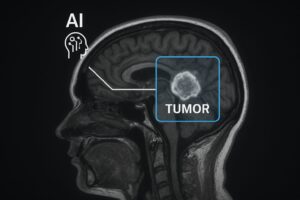
AI algorithms can detect cancers, cardiac issues, fractures, strokes, and tumors with incredibly high accuracy — sometimes earlier than human doctors.
2. Early Disease Prediction
AI can predict diseases like heart failure, diabetes, or stroke before symptoms appear by analyzing patterns in patient history, lab results, and lifestyle data.
3. Reduced Costs & Higher Efficiency
Hospitals save time and money by automating:
Report writing
Imaging analysis
Appointment scheduling
Medical documentation
4. Personalized Treatment Plans
AI studies millions of patient cases to recommend ideal, personalized treatments.
5. Remote Monitoring Through Smart Devices
Wearables + AI can monitor:
Heart rate
Blood pressure
Oxygen level
ECG
Sleep patterns

Who Is Using AI in Healthcare? (Real-World Leaders)
1. Hospitals & Healthcare Systems
Cedars-Sinai (USA) uses AI triage systems to classify patients faster.
Mayo Clinic uses AI to enhance cardiology and oncology diagnosis.
Apollo Hospitals (India) uses AI for cancer detection and radiology support.
2. AI Healthcare Companies
Aidoc → Real-time radiology AI for detecting critical medical conditions.
Tempus → AI in personalized cancer treatment.
Butterfly Network → AI handheld ultrasound scanners.
Babylon Health / Ada Health → AI medical chatbots.
3. Tech Giants
Google Health (DeepMind) → AI models for breast cancer detection.
Microsoft Cloud for Healthcare → AI tools for hospitals.
IBM Watson Health → Oncology & clinical decision support.
4. Researchers & Universities
AI is used in labs worldwide for:
Drug discovery
Genetics
Disease modeling
Epidemiology predictions
Top Applications of AI in Healthcare
1. Medical Imaging & Radiology
AI detects:
Brain hemorrhage
Lung cancer
Bone fractures
Pneumonia
Retinal disorders
AI reduces radiologist workload by up to 40%.
2. Virtual Health Assistants
AI bots answer questions, check symptoms, and schedule appointments.
3. Drug Discovery & Development
AI predicts:
Which molecules can become good medicines
Drug toxicity
Best clinical trial candidates
This reduces development time from 10 years to 2–3 years.
4. Robotic Surgery
AI-driven robots assist surgeons with:
High-precision movements
3D visualization
Reduced surgical errors
5. Electronic Health Record (EHR) Automation
AI writes medical notes automatically while doctors speak.
Benefits of AI in Healthcare (SEO Bullet Points)
Faster diagnosis
Higher accuracy
24/7 patient monitoring
Lower healthcare costs
Better clinical decision-making
Reduced doctor burnout
Improved patient experience
Earlier disease detection
Personalized therapies
Enhanced hospital management
Challenges & Risks of AI in Healthcare
1. Data Privacy Concerns
Medical data is sensitive; AI requires strict protection.
2. Algorithm Bias
If data is biased, AI can give inaccurate results.
3. Explainability Issues
AI “black box” decisions can confuse doctors.
4. High Infrastructure Cost
AI systems require strong hardware and expert management.
5. Over-Reliance on AI
Doctors must balance AI assistance with clinical judgment.
Future of AI in Healthcare (2025–2030)
1. Explainable AI (XAI)
Doctors will better understand why AI made certain decisions.
2. AI + Genomics
Treatments will be customized to patient DNA.
3. Federated Learning
Hospitals can train AI without sharing patient data — improving privacy.
4. Fully Automated Hospitals
From registration to medication systems — automation everywhere.
5. AI-Powered Surgery Rooms
AI robots will be involved in every phase of surgeries.

Conclusion
Artificial Intelligence in healthcare is not a future dream — it is transforming medicine right now. From smarter diagnostics to personalized treatments and predictive analytics, AI is making healthcare faster, cheaper, and more accurate. As hospitals, doctors, and technology companies work together, AI will play an even bigger role in revolutionizing modern medical care.